

In September 2025, the Anti-Corruption Agency of the Republic of Kazakhstan was disbanded, and its functions were transferred to the Committee for National Security (KNB). This reform sparked lively public and expert debate, with many asking: will it improve the effectiveness of the fight against corruption? Experts from the media outlet Tengrinews.kz analyzed anti-corruption practices in various countries and compared them with Kazakhstan’s experience.
Scale of Corruption in Kazakhstan
The National Report on Anti-Corruption, published by the former Anti-Corruption Agency on July 1, 2025, outlined the agency’s key results for 2024 and compared them with previous years.
According to the report, 11,052 corruption-related crimes were registered in Kazakhstan from 2019 to 2024. The most common were:
- Giving bribes (2,272 cases)
- Receiving bribes (1,612 cases)
- Fraud (926 cases)
- Abuse of power (518 cases)
- Embezzlement or misappropriation of entrusted property (613 cases)
Experts noted an interesting trend: the highest number of corruption crimes (2,245) was recorded in 2019—the year the Anti-Corruption Agency was established. This annual figure has not been surpassed since.
Annual corruption cases:
- 2020 — 2,193
- 2021 — 1,557
- 2022 — 1,724
- 2023 — 1,692
- 2024 — 1,641
A decline in registered cases does not necessarily mean corruption is decreasing. For example, in 2024 the number of especially grave corruption crimes rose from 57 to 65, and high-profile scandals continued to emerge regularly. Experts suggest that the “quality” of corruption is improving—it is becoming more organized, sophisticated, and damaging.
In 2024, 914 people were convicted of corruption offenses, about 50% of whom were public officials. Among them were 99 high-ranking officials (national and regional level), including akims (mayors) and judges.
Public servants held accountable in 2024:
- 155 employees of internal affairs bodies
- 204 employees of akimats and their subdivisions
- 23 Ministry of Defense employees
- 20 employees each from the Ministries of Agriculture and Finance
- 15 Ministry of Sport employees
- 21 employees of the Criminal Corrections System
- 6 judges
- 4 akims
Only 326 public servants received prison sentences; the rest were given lighter punishments such as restricted freedom or fines.
The report did not specify total financial damage, but recovered assets provide an indication:
- Damage compensated in 2024: 371.2 billion tenge
- Seized property: 28.9 billion tenge
- Assets returned to the state and quasi-public sector: 486.5 billion tenge (including 109.5 billion tenge in cash to the budget)
- Damage compensated 2022–2024: 764.8 billion tenge—2.5 times more than in the previous 10 years
- Damage compensated 2012–2021: 290.6 billion tenge
This suggests an average annual “turnover” of corruption in Kazakhstan of at least 81.2 billion tenge. However, recovered amounts are linked to major asset-return efforts and high-profile cases following the January 2022 events (Qantar). For example, in the Boranbayev case alone, assets worth 90 billion tenge were returned in 2023.
Real corruption scales are likely much higher, as not all stolen funds can be detected and returned.
Beyond investigations, the former Agency also promoted anti-corruption awareness. In 2024 it held 686 events with public opinion leaders, published 358 media articles, and aired 70 episodes of the TV program “STOP Corruption.” State-funded anti-corruption series and films (“Dert,” “Heroes of Our Time,” “Sake,” “Education Camp,” “Winners”) were broadcast on national channels. Theatres staged plays such as “The Government Inspector,” “Mr. and Mrs. Pichems,” “Son and Thief,” “Who Killed the Actor?,” “The Bride Who Entered the Tender,” and “Funny Money.”
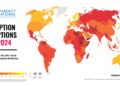
These efforts are paying off. According to Transparency International’s 2024 Corruption Perceptions Index (CPI), Kazakhstan ranked 88th out of 180 countries with 40 points out of 100—an improvement of one point and five places compared to the previous year. This is the country’s best result ever (28 points in 2012; 34 points in 2020).
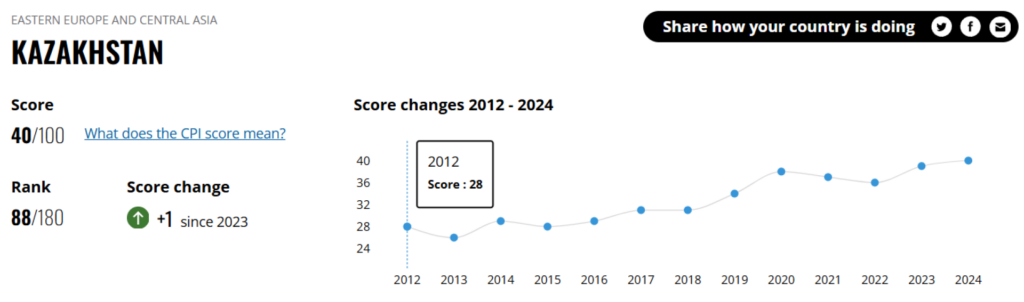
Note: The Corruption Perceptions Index (CPI) reflects perceived levels of public-sector corruption based on expert and business surveys, using data from sources such as the World Bank, Economist Intelligence Unit, and Freedom House.
Despite progress, Kazakhstan still lags far behind Scandinavian leaders. Tengrinews.kz experts therefore examined their practices, as well as those of other Western countries.
Scandinavian Countries as Anti-Corruption Benchmarks
Denmark: Specialized Prosecution Service (SØIK)
Denmark is a world leader in the Corruption Perceptions Index (90 out of 100). In this country, the Danish Public Prosecution Authority for Serious Economic and International Crime (SØIK) is responsible for investigating such crimes. However, this agency lacks a stable team, a specific office, or a clear leadership structure.
The Danish SØIK operates as a specialized prosecutor’s office. This means that anti-corruption work is integrated into the country’s overall legal system, rather than being a separate law enforcement agency.
The SØIK does not have a fixed staff; for each case, specialized multidisciplinary teams are formed from professionals and experts with the necessary expertise, whether in financial auditing, forensics, or international law.
Close cooperation with other government agencies, such as the police, financial regulators, and the tax service, as well as private experts such as auditors and analysts, also plays a significant role in the agency’s work. SØIK staff meet regularly with colleagues to share experiences, consult, and improve the effectiveness of the fight against corruption.
The Public Prosecution Service reports to the Danish Ministry of Justice, and its activities are overseen at several levels:
- Independent courts hear cases initiated by SØIK, monitoring the legality and fairness of the proceedings;
- Parliament conducts political oversight and requests progress reports;
- The Audit Office verifies the effectiveness and legality of the use of public funds;
- The Anti-Corruption Forum at the Ministry of Justice coordinates the efforts of various agencies and facilitates information exchange.

Sweden: Decentralization and Separation of Functions
Sweden is also one of the leaders in the CPI ranking, ranking sixth (80 points out of 100). This country’s example is interesting because there is no single agency responsible for investigating all corruption crimes. Instead, there is a network of agencies that coordinate efforts and support each other during investigations.
National Anti-Corruption Police Department (NACPU): Investigates bribery and other corruption cases, including those with international implications. The department employs a small team of prosecutors and accountants who specialize in complex and high-profile cases.
National Anti-Corruption Department of the Prosecutor General’s Office: Conducts criminal prosecutions of corruption cases, oversees the legality of investigations, and supports prosecution in court. Prosecutors work closely with the police.
Local Police Departments: Investigates less complex corruption cases (at the regional and municipal levels) by regular police units. If necessary, they can call on experts from the NACPU or the Public Prosecutor’s Office.
The Swedish National Audit Office monitors the use of public funds, identifies violations, and reports information to law enforcement agencies.
The Parliamentary Ombudsman and the Chancellor of Justice review citizen complaints about the actions of public officials, conduct audits, and can initiate investigations if signs of corruption are discovered.
This delegation of authority allows each agency to focus on its specialization, avoid conflicts of interest—when one agency seeks to take matters into its own hands, distinguish itself, or vice versa—and ensures a high level of public trust. The openness of government agencies also plays a significant role in this. Information on investigations and the results of their work is published publicly.
Success in the fight against corruption has also been achieved through active monitoring of the work of anti-corruption agencies. Their activities in Sweden are overseen by the Ministry of Justice, Parliament, the Ombudsman, and independent courts, but the most important monitoring is by the media and civil society, with whom the authorities actively engage. The main difference from the Kazakhstani model is decentralization and division of functions between specialized law enforcement agencies.
Norway: National Authority for Investigation and Prosecution of Economic and Environmental Crime (Økokrim)
In 2024, Norway ranked fifth (81 points out of 100) among 180 countries worldwide. The National Authority for the Investigation and Prosecution of Economic and Environmental Crime (Økokrim) is responsible for combating corruption in the country.
This agency combines the functions of the police and the public prosecutor’s office. It has approximately 180 employees, divided into multidisciplinary teams led by state prosecutors. Each department has a specific specialization: corruption, computer crime, fraud, and so on.
Despite its centralized structure, Økokrim operates exclusively within a system of constant public and parliamentary oversight. Its activities are also regularly reviewed by independent experts, not always positively.
For example, in 2021, Norwegian media actively discussed the agency’s ineffectiveness in investigating crime among corporate managers. Journalists claimed that the agency had allowed large companies to investigate cases against themselves under the pretext of collaborating with independent experts. Nevertheless, the agency has not abandoned cooperation with independent experts.
Moreover, the agency continues to actively collaborate with the media, as journalists in Norway are responsible for 25 percent of all corruption revelations.
Therefore, Økokrim staff actively collaborate with reporters and often take the initiative themselves, providing information for journalistic investigations to improve anti-corruption indicators.
For Kazakhstan, the Norwegian model is interesting because it combines investigative and prosecutorial functions within a single agency, similar to what is currently being implemented in Kazakhstan with the transfer of Anti-Corruption functions to the National Security Committee.
USA and Europe: Separation of Powers and Checks and Balances
The United States: A Complex System of Federal Agencies
In the United States (with a score of 65 out of 100), anti-corruption responsibilities are divided among several agencies, creating a system of checks and balances. Domestic corruption investigations are handled by the Federal Bureau of Investigation (FBI), while international crimes, including financial crimes, are referred to the Central Intelligence Agency (CIA), which is responsible for foreign security matters.
The FBI has approximately 36,000 employees, but anti-corruption activities are only one of the agency’s areas of focus, along with other types of federal crimes. Regarding corruption, the agency investigates incidents related to federal procurement, fraud, and violations of foreign corrupt practices laws.
The CIA, in turn, collects intelligence and analyzes intelligence on corruption networks, money laundering, and illicit financing. The agency provides information to other federal agencies, such as the Justice Department and the FBI, for subsequent investigations. The CIA also coordinates intelligence collection outside the United States and participates in international operations to identify and disrupt corruption.
The FBI and CIA are accountable to Congress (the bicameral US legislature) and the judiciary. They also publish reports on their work. Independent investigations of their activities periodically emerge.
Therefore, in the American system, there is a clear separation between internal and external security.
In Kazakhstan, the KNB has combined the functions of foreign intelligence, counterintelligence, border service, and now also the fight against corruption.

United Kingdom: Serious Fraud Office (SFO)
In the UK (71 out of 100), the Serious Fraud Office (SFO) is the primary corruption investigation agency. This agency is unique in that it is not part of any intelligence agency, but rather an independent government agency created to protect the UK’s financial system.
The SFO strives to protect the UK’s reputation as a safe place to do business, and therefore handles cases that are often complex internationally, cooperating with other law enforcement agencies both domestically and internationally. Cases are selected based on an assessment of the potential damage to the public and the country’s reputation.
The agency employs approximately 500 staff, including lawyers, investigators, and analysts. The Attorney General and Parliament oversee the agency’s work, ensuring a high level of transparency and monitoring.
The SFO has the power not only to conduct investigations and gather evidence but also to bring charges in court. For this purpose, the agency has a dedicated legal team. In 2025, the SFO joined the International Anti-Corruption Coordination Centre (IACCC), strengthening the UK’s ability to combat large-scale corruption and fraud abroad.
The British model strikes an interesting balance between specialization and the integration of investigative and prosecutorial functions within a single agency. At the same time, the SFO remains under the oversight of the Attorney General and Parliament, rather than being part of the intelligence services. This ensures greater transparency and legal oversight.
France: Multi-Layered System
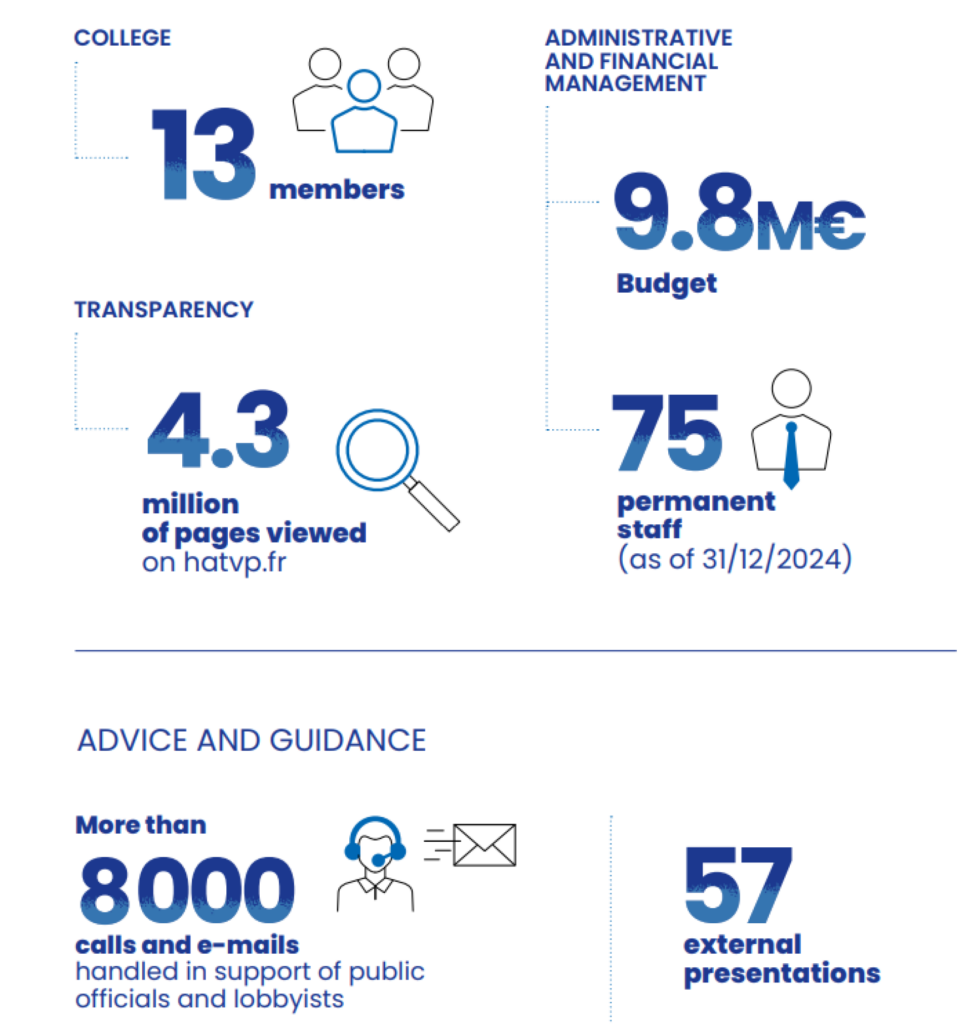
In France (69 points out of 100), anti-corruption activities are divided among three government agencies. This model is structured as follows:
High Authority for Transparency in Public Life (HATVP).
Responsible for identifying and preventing potential conflicts of interest among French civil servants and officials, and ensuring that politicians and high-ranking officials do not conceal their assets and income.
National Financial Prosecutor’s Office (PNF).
Investigates and prosecutes serious economic and financial crimes.
French Anti-Corruption Agency (AFA).
Responsible for the prevention, monitoring, and enforcement of sanctions in the fight against corruption.
Because of this division, each French anti-corruption agency has its own specialized staff for specific tasks. The model is based on the separation of prevention, monitoring, and prosecution functions. Furthermore, these agencies report to different authorities to avoid contradictions. This method helps avoid conflicts of interest.
Anti-Corruption Systems in Kazakhstan’s Neighbors
In the 2024 Corruption Perceptions Index, Kazakhstan’s neighboring countries rank as follows:
- Uzbekistan — 121st (out of 180, or 32 points out of 100, a decrease compared to 2023);
- Kyrgyzstan — 146th (25 points out of 100, a decrease);
- Russia — 154th (22 points out of 100, a decrease);
- Tajikistan — 164th (19 points out of 100, a decrease);
- Turkmenistan — 165th (17 points out of 100, a decrease).
Kazakhstan is the leader in the region in the CPI anti-corruption rating.
Kyrgyzstan: Constant Reorganizations and Political Instability
In Kyrgyzstan, the fight against corruption falls under the jurisdiction of the State Committee for National Security (SCNS) and the Prosecutor General’s Office. In recent years, the country has undergone several reorganizations of anti-corruption agencies, which, judging by the rating, has negatively impacted the consistency and effectiveness of their work.
Reforming the Intelligence Services in Uzbekistan
In Uzbekistan, following a change in leadership, the State Security Service (SSS) was created to replace the discredited National Security Service. The SSS reports directly to the president and has broad powers, including combating corruption. Despite reform efforts, the organization remains closed.
Tajikistan: Systemic Corruption
In Tajikistan, the fight against corruption is formally entrusted to the State Committee for National Security (SCNS) and the State Agency for Financial Control and Anti-Corruption. However, according to media reports, employees of these agencies themselves are often the targets of investigations for bribery and fraud.
Turkmenistan: Minimal Transparency in a Closed System
In Turkmenistan, the Ministry of National Security (MNS) retains the secret police functions inherited from the Soviet KGB. The system is characterized by extreme secrecy, a lack of public oversight, and minimal participation by international organizations. A national anti-corruption program formally exists, but the details of its implementation remain classified.
How Kazakhstan Can Adopt the Best International Practices and Avoid Risks
Over the past eight years, Kazakhstan has demonstrated steady growth in international corruption perception ratings. Structural reforms have been implemented, significant amounts of stolen assets have been recovered, and political will to fight corruption is evident.
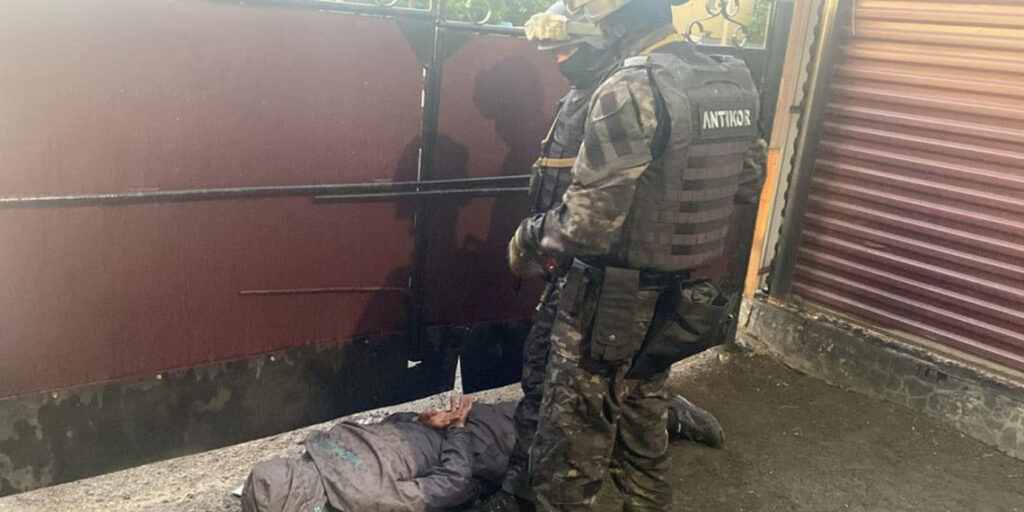
An analysis of international experience shows that the decision to transfer Anti-Corruption functions to the National Security Committee has both potential benefits (consolidation of efforts, improved coordination, access to operational information) and risks (secrecy, lack of civil and parliamentary oversight, loss of specialization).
Nevertheless, Kazakhstan still has many opportunities to improve the situation and modernize the country’s anti-corruption system. Positive models and methods from other countries could be useful to our country.
According to expert opinions and international experience, the following could be key elements for success:
- Ensuring transparency;
- Strengthening parliamentary and public oversight;
- Developing specialization;
- Strengthening international cooperation;
- Fostering an anti-corruption culture in society.
The issue of anti-corruption reform is particularly pressing given the recent statement by the National Security Committee (KNB). The agency was asked whether the transfer of powers to the Anti-Corruption Committee means that corruption is now officially recognized as a threat to national security. The KNB stated that, in accordance with Article 6 of the Law “On National Security of the Republic of Kazakhstan,” corruption is considered one of the components of a threat to national security.